
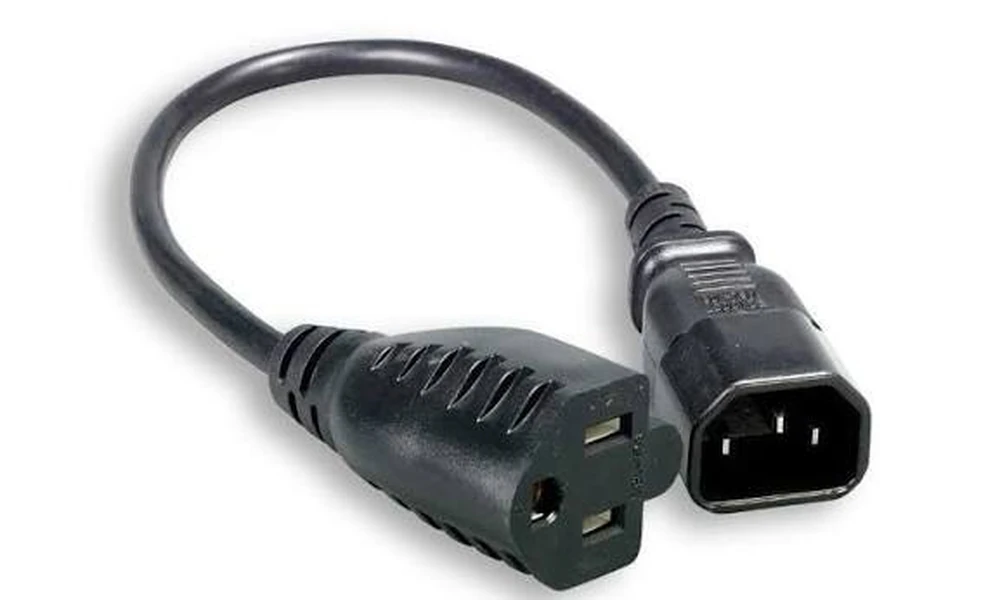
The IEC 60320 standard governs one of the most widely used families of electrical connectors globally, defining the dimensions, current ratings, temperature ratings, and mechanical requirements for the power entry connectors that appear on the vast majority of electrical and electronic equipment. For Indian equipment manufacturers developing products for domestic and export markets, correct understanding and specification of IEC connectors is essential to both product safety and market access compliance.
The IEC 60320 Connector Family
IEC connectors under the 60320 standard are organised into appliance outlet and appliance inlet pairs, designated by the C-numbering convention. The outlet is the female component mounted on the equipment; the inlet accepts the power cord’s plug. The most commonly specified connector types cover the current and temperature rating ranges that serve the great majority of electrical and electronic equipment applications.
The C13/C14 pair, rated at 10 amperes and 250 volts, is the most universally used IEC power connector configuration globally. It appears on computer equipment, monitors, laboratory instruments, audio-visual equipment, and network infrastructure from desktop devices through to rack-mounted servers. The C13 outlet and C14 inlet are directly interchangeable across the full range of compliant power cords available worldwide, making them the default choice for any equipment where global market access is a design objective.
C15 and C16: The High-Temperature Pair
The C15/C16 pair carries the same 10-ampere current rating as C13/C14 but is specified for equipment operating at elevated temperatures, with the C15 outlet distinguished from the C13 by a notch in the housing that prevents insertion of a standard C13 cord. This mechanical keying is a deliberate safety feature ensuring that only appropriately temperature-rated power cords are used with equipment that runs hot. Power entry connectors in the C15/C16 configuration are used in hot beverage appliances, electric kettles, and certain industrial heating equipment where temperatures at the connector exceed what the C13/C14 pair is rated to handle.
C19 and C20: The High-Current Pair
The C19/C20 pair is rated at 16 amperes, making it the appropriate IEC connector choice for higher-load equipment including servers, network switches, uninterruptible power supplies, and other rack-mounted ICT infrastructure where the 10-ampere rating of C13/C14 is insufficient. Specifying C13/C14 in an application that actually draws close to 16 amperes creates a compliance violation and a genuine safety risk, since the connector will be operating at or beyond its rated capacity under normal operating conditions.
Selection Guidance for Indian Equipment Manufacturers
For Indian equipment manufacturers specifying IEC connectors, the selection process requires confirming the equipment’s actual input current at rated load and selecting a connector pair whose rated current provides adequate margin above this measured maximum. Thermal performance at the connector must also be verified, since contact resistance in a connector operating near its rated current can produce significant temperature rise that must remain within the limits specified by the applicable equipment standard.
Certification requirements for the target market must be confirmed before finalising connector selection. IEC connectors for equipment sold in India must comply with applicable BIS standards; for export to European and North American markets, connectors carrying CE and UL/cULus certification respectively are required. Specifying connectors with the appropriate certifications from the outset avoids the product redesign risk that certification failures during equipment-level testing create.