
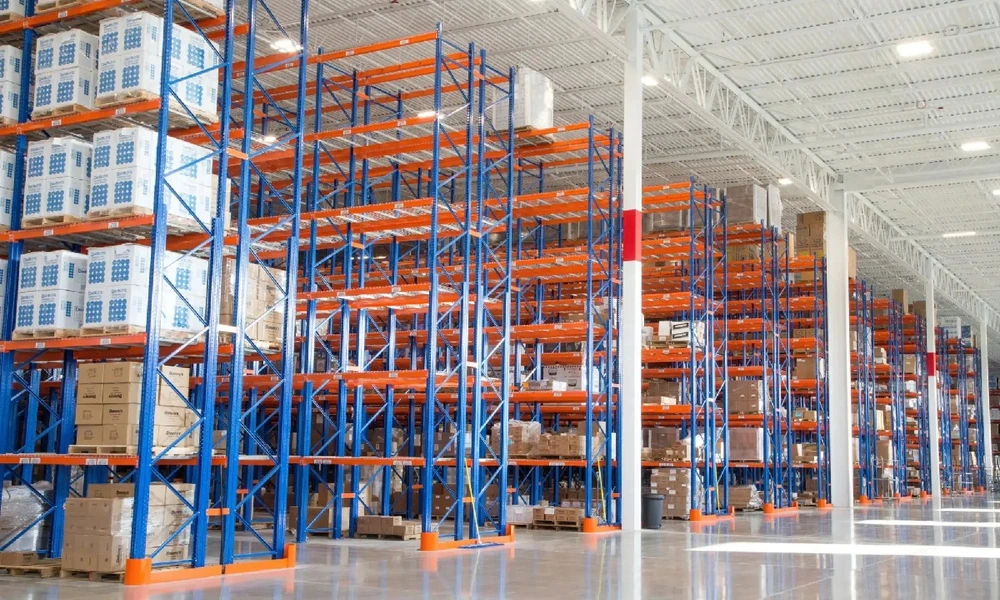
Many businesses approach racking as though it were a furniture purchase: measure the room, count the pallets and ask for a price. A racking installation is closer to a small structural project, with imposed loads, floor capacity, truck clearances and fire safety all bearing on the final layout. Anyone considering pallet racking from NTL Storage Solutions will get a far more useful proposal by understanding which inputs drive the design, and which decisions become difficult to reverse once the steel has been anchored to the slab.
Start With the Pallet, Not the Building
The unit load is the foundation of every calculation. Its footprint, height including overhang, gross weight and the condition of the timber underneath decide beam length, beam spacing and the number of levels a bay can carry. A warehouse that handles both standard and Euro pallets, or a mix of light cartons and dense drums, needs those differences recorded before anything is drawn.
Why Load Data Shapes Every Component
Beams are rated in pairs for a uniformly distributed load, and upright frames are rated for the total load carried by a bay at a given first beam height. Raising the first beam level to clear a tall pallet lowers the frame capacity, because the unsupported length of upright becomes longer. This is why a proposal should state bay loads and beam loads separately, and why moving beams later without checking the figures can quietly take a frame beyond what it was designed to carry.
The Floor Slab Is Part of the System
Each upright transfers a concentrated load through a small base plate into the concrete. On an upper storey of a multi-level industrial building, the permitted floor loading in kilonewtons per square metre can limit rack height well before the ceiling does. Slab thickness, reinforcement and the position of joints also affect where anchors can be drilled. A supplier who asks for the floor loading certificate at the outset is doing necessary groundwork.
Matching Aisles to the Trucks You Run
Aisle width is dictated by the handling equipment, not by preference. A counterbalance forklift needs considerably more turning room than a reach truck, and an articulated or turret truck needs less again. Lift height, residual capacity at that height and mast clearance under beams or sprinkler pipes all need checking against the proposed top level. Discovering afterwards that the existing truck cannot place a full pallet on the top beam is an expensive mistake.
Selective, Dense and Narrow Aisle Layouts
The choice of configuration follows from how stock moves. Selective racking gives direct access to every pallet and suits a wide product range. Double-deep and drive-in arrangements trade that access for density and work best where many pallets of the same line are held together. Very narrow aisle layouts keep full selectivity while shrinking the aisles, at the cost of specialised trucks. Reviewing pallet racking from NTL Storage Solutions against real movement data, not only a headline pallet count, shows which of these compromises the operation can live with.
Fire Safety and Sprinkler Clearances
Racking changes the fire behaviour of a space because it stacks combustible goods vertically with air gaps between them. Storage height, the commodity being stored and the existing sprinkler design all influence what the fire authority and the building’s insurer will accept. Clearances beneath sprinkler heads, flue spaces between back-to-back pallets and unobstructed escape routes need to be shown on the layout. Raising these points during design is far cheaper than removing a top level later.
What Installation Involves
A competent installation is more than bolting frames together. Uprights are set out to a surveyed grid, shimmed to plumb within tolerance and fixed with anchors suited to the slab. Beam connectors are fitted with locking pins so that a fork tine cannot lift a beam out of its slots. It is reasonable to ask who will carry out the installation and how the finished work is checked.
Load Notices and Operator Habits
A rack is only as safe as the way it is used. Load notices fixed to the end of each run tell operators the permitted pallet weight, beam load and bay load for that configuration, and they become wrong the moment beam levels are altered without recalculation. Most serious damage comes from truck impact at the lower part of the front uprights. Column guards, clear floor markings and a culture in which drivers report every knock do more for long-term safety than heavier steel alone.
Inspection Over the Life of the Rack
Steel racking does not wear out gradually in the way a machine does; it fails after damage that went unnoticed or unreported. A sensible regime combines brief visual checks by warehouse staff with a periodic inspection by someone trained to assess dents, twists and missing locking pins against published limits. Damaged components should be offloaded and replaced with matching parts from the original manufacturer, since mixing profiles from different systems invalidates the load figures on which the whole design depends.
Deciding Whether a Proposal Is Right for You
A sound proposal states the pallet data it assumed, the bay and beam loads, the floor loading it relied on, the truck it was drawn around and the design standard applied. If any of these are missing, ask before comparing prices, because two quotations built on different assumptions are not quoting for the same thing. Businesses that brief their supplier properly, walk the site with the designer and keep the load documentation afterwards tend to find that pallet racking from NTL Storage Solutions serves them for many years with little drama.