
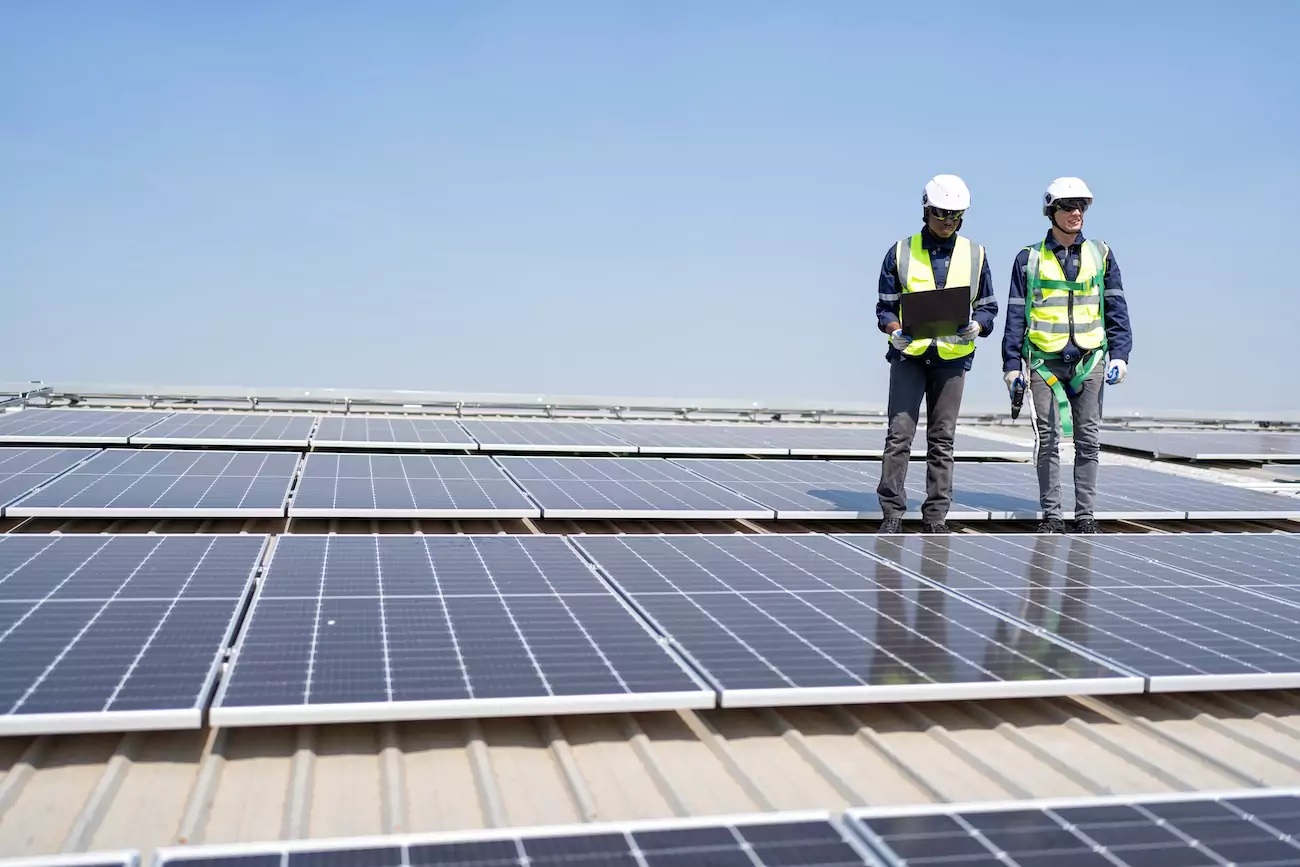
Harnessing the sun’s energy is now a realistic and powerful option for properties across the United Kingdom. This renewable energy source offers a practical route to greater sustainability and control over rising energy costs.
Globally, this technology’s significance is soaring. In 2024, it generated 6.9% of the world’s electricity. The International Energy Agency projects it will become the largest global energy source by 2029. This trend presents a major opportunity for UK homes and commercial enterprises.
This ultimate guide delivers authoritative insights for anyone considering this technology. It covers everything from basic principles to advanced innovations, economic savings, and environmental advantages. Readers will learn how to achieve energy independence and reduce their carbon footprint with modern, efficient systems.
Key Takeaways
- Solar energy is a transformative and accessible renewable solution for UK properties.
- It represents a sustainable and infinite source of electricity that creates no harmful emissions.
- Global adoption is accelerating, with projections indicating it will be the world’s primary energy source soon.
- This guide provides a comprehensive overview, from installation to long-term financial returns.
- Modern technology makes it more efficient and affordable for both residential and commercial use.
- The primary benefits include reducing energy bills and lowering your carbon footprint.
Introduction to Solar Power in the UK
Humanity’s relationship with solar energy dates back to antiquity, evolving through scientific breakthroughs to become a cornerstone of modern renewable strategy. The United Kingdom has embraced this technology with growing enthusiasm, building on centuries of global innovation.
Historical Context and Early Developments
Ancient civilisations first harnessed the sun’s rays in the 7th century B.C., using reflective surfaces to light fires. This early ingenuity laid the foundation for future advancements.
French physicist Edmond Becquerel made a pivotal discovery in 1839. He observed the photovoltaic effect, demonstrating that light could generate electricity directly.
The breakthrough came in 1954 at Bell Labs. Researchers developed the first practical silicon photovoltaic cell capable of powering everyday equipment.
Current Trends and Market Growth
The UK achieved a significant milestone in May 2023. The nation’s first transmission-connected solar farm near Bristol began operations, generating substantial electricity annually.
This project represents a major shift in how solar power in the United Kingdom integrates with national infrastructure. The technology has evolved from small experimental setups to large-scale commercial installations.
Government ambitions are equally impressive. The Powering up Britain report targets a five-fold increase in solar generation capacity by 2035. This expansion could power millions of homes across the country.
Market growth continues to accelerate as efficiency improves and costs decrease. The UK’s commitment positions it as a leader in renewable energy adoption.
What is Solar Power? The Renewable Energy Source Explained
The principle behind this energy source is elegantly simple: converting daylight into electricity and heat. This process provides a clean, sustainable alternative to finite fossil fuels.
It qualifies as a renewable energy source because it relies on the sun. This celestial body offers an essentially infinite supply, unlike coal or gas which deplete over time.
A key advantage is its operation without creating harmful greenhouse gas emissions. This makes it a powerful tool for reducing a property’s carbon footprint.
Sunlight contains tiny energy particles known as photons. Specialised technologies capture these photons to generate an electrical current.
There are two primary methods for harnessing this power. Photovoltaic systems convert light directly into electricity. Concentrated solar power uses the sun’s heat indirectly.
The sustainability of the technology is further enhanced by the panels themselves. They typically last for over 25 years, and the materials used are increasingly recycled.
This represents a fundamental shift towards a perpetual supply of clean energy. As long as the sun shines, this source remains available.
How Does Solar Power Work?
At the core of modern renewable energy systems lies photovoltaic technology, a direct method for generating electricity. This process transforms daylight into usable power for homes and businesses without moving parts or noise.
Photovoltaic (PV) Technology Explained
Most solar panels are constructed from crystalline silicon cells, a semiconductor material. These cells are protected within a sturdy metal frame and a glass casing.
When particles of light, known as photons, strike the silicon, they energise electrons. This activity creates an electric charge.
The resulting flow of electrons is a direct current (DC). This is the initial form of electricity that panels generate.
Conversion of Sunlight to Electricity
Households and the National Grid use alternating current (AC). An inverter is a crucial device that changes the DC from the panels into AC.
This conversion makes the energy compatible with standard sockets and appliances. For a deeper look at this process, explore this guide on how solar power works.
The entire operation relies on the photovoltaic effect. It allows these systems to produce a current whenever light is present, even on overcast UK days.
Solar Power in Homes and Businesses
The practical application of this clean energy source splits clearly into two main categories: residential and commercial, each with unique characteristics. Systems are designed to match the specific energy demands and available space of the property.
Residential Applications and Benefits
For UK homes, installations typically involve panels mounted on rooftops. These systems allow households to generate their own electricity.
This self-generation reduces reliance on the national grid and leads to lower energy bills. During peak sunlight hours, some homes can eliminate their electricity costs entirely.
Homeowners enjoy long-term financial benefits and often see an increase in their property’s value. The systems provide clean energy for decades with minimal upkeep.
Commercial Installations and Their Impact
Commercial setups are far more diverse. They can include large rooftop arrays on warehouses or ground-mounted systems on industrial land.
These installations generate substantial amounts of power to offset high operational costs. Businesses achieve significant savings and enhance their sustainability credentials.
Almost half of all new capacity installed recently was on rooftops, showing its popularity. Most UK systems connect to the grid, allowing excess generation to be exported.
This grid connection ensures a reliable backup supply. The longevity of the panels, often 25-40 years, makes them a sound investment for any property size.
Technological Innovations in Solar Energy Generation
Rapid technological advancements are revolutionising how we capture and convert sunlight into usable energy. These innovations focus on improving efficiency, reducing costs, and expanding application possibilities.
Cutting-Edge Developments by Frontier Energy Ltd
Frontier Energy Ltd leads research into next-generation photovoltaic materials. Their work pushes the boundaries of what’s achievable in renewable energy technology.
The company develops solutions that maximise electricity production from available light. Their research contributes to more efficient and versatile energy systems.
Emerging Solar Technologies
Perovskite cells represent one of the fastest-advancing technologies in the field. Efficiency rates have jumped from 3.8% in 2009 to over 25% today.
Tandem configurations combining perovskite and silicon materials achieve nearly 30% efficiency. This breakthrough exceeds traditional silicon cell performance.
Thin-film technology deposits photovoltaic materials onto various substrates. This approach offers installation flexibility and potential cost reductions.
Agrivoltaic systems combine agriculture with energy production. Elevated panel designs allow farming activities to continue underneath, maximising land use potential.
These innovations demonstrate the ongoing evolution of renewable energy technology. They promise greater efficiency and broader application possibilities for the future.
Economic Advantages and Cost-Effectiveness of Solar Installations
Significant cost reductions have positioned solar installations as one of the most economically viable energy options available today. Since 2020, this technology has become the cheapest source of electricity generation globally.
The financial landscape has transformed dramatically over decades. Installation expenses have plummeted from approximately £21,000 per kilowatt in 1982 to around £3,000 per kilowatt by 2008.
Installation and Maintenance Cost Analysis
Photovoltaic systems feature a unique economic structure. Upfront capital and financing costs represent 80-90% of total expenses.
These systems require no fuel purchases since they generate electricity from freely available sunlight. This eliminates ongoing operational costs that affect traditional energy sources.
The long operational lifespan provides substantial economic benefits. Panels typically function effectively for 25 to 40 years with minimal maintenance requirements.
After recovering the initial investment, systems provide decades of essentially free electricity generation. This creates significant long-term savings for property owners.
Comparative Cost Analysis of Energy Generation Methods
| Energy Source | Installation Cost per kW | Fuel Costs | Typical Lifespan |
| Solar PV System | £3,000-£6,000 | None | 25-40 years |
| Natural Gas | £800-£1,200 | High & Volatile | 20-30 years |
| Coal Power | £2,000-£3,500 | Medium & Increasing | 30-40 years |
| Nuclear Power | £5,000-£8,000 | Low but Specialised | 40-60 years |
Return on investment timelines continue to improve. Reduced energy bills, export income, and government incentives contribute to attractive payback periods.
Technological improvements and manufacturing scale further reduce production costs each year. Levelised cost of electricity analysis confirms solar’s competitive advantage.
Businesses gain additional economic benefits including price stability and enhanced sustainability credentials. These factors make solar investments increasingly compelling for UK properties.
Environmental Implications and Sustainability Considerations
A critical aspect of evaluating any energy solution involves its impact on the natural world. This technology offers significant environmental advantages, primarily through its operation without producing harmful greenhouse gas emissions.
This makes it a crucial tool for reducing a property’s carbon footprint. The long lifespan of the panels, often exceeding 25 years, further enhances their sustainability credentials.
Sustainable Partnerships with Frontier Energy Ltd
Responsible development is key to maximising benefits. Companies like Frontier Energy Ltd are committed partners in sustainable energy development.
They focus on minimising environmental impacts while delivering the full advantages of clean energy installations across the UK.
Reducing Carbon Emissions and Impact on Nature
The materials used in panels are increasingly recyclable, with glass and aluminium comprising 80-90% of their composition. This supports a circular economy, shrinking the overall carbon footprint over time.
While large solar power plants require land, the industry actively addresses this. Innovations like agrivoltaic systems allow agriculture and electricity generation to share the same space.
Thorough environmental assessments ensure local ecosystems are protected. When compared to fossil fuel sources, the lifecycle environmental assessment of this renewable energy is highly favourable.
Government Policies and Incentives for Renewable Energy
Strategic policy frameworks have become essential drivers for renewable energy deployment in modern economies. The UK government recognises this through ambitious targets and supportive mechanisms.
Legislation creates favourable conditions for investment in clean technology. Industry experts from Frontier Energy highlight how stable policies enable long-term planning.
Role of Legislation in Promoting Solar Power
The Powering up Britain report outlines a five-fold increase in solar generation capacity by 2035. This targets 70 gigawatts, enough for approximately 20 million homes.
Historical energy crises in the 1970s prompted global policy reorganisations. Governments worldwide renewed focus on developing alternative energy sources.
Feed-in tariffs implemented in the early 2000s provided investment security. They guaranteed fixed prices for solar-generated electricity across Europe.
Expert Insights from Frontier Energy
Current UK instruments include planning reforms and business rate exemptions. Various grant programmes reduce financial barriers for properties.
Policy certainty enables developers to commit capital to large-scale projects. Subsidies help achieve cost competitiveness before market dynamics sustain growth.
Continued support remains essential for achieving 2035 targets. This requires coordinated efforts across planning, grid infrastructure, and financial incentives.
Integration of Solar Power into the UK Energy Grid
A major milestone for British renewable energy was achieved in May 2023 with the activation of a pioneering project. The UK’s first transmission-connected solar farm near Bristol began feeding electricity directly into the high-voltage national transmission network.
This was a significant advancement. Previously, solar farms connected to lower-voltage regional distribution grids. Transmission connectivity allows this clean electricity to be transported efficiently over much greater distances.
Grid Connectivity and Storage Solutions
Most UK homes and businesses with panels use grid-connected systems. These installations feed surplus electricity back to the grid during sunny periods. They draw power from the network when generation is low.
This technology works well with other renewables. Wind energy and solar power often complement each other. When the sun isn’t shining, the wind is frequently blowing, helping to balance the grid.
Battery storage is a key solution for enhancing reliability. It captures excess energy for use in the evening or on cloudy days. This smooths out supply fluctuations.
Managing a grid with variable inputs requires sophisticated forecasting. Grid operators use advanced tools to maintain stability as more solar power plants come online. The UK’s infrastructure is evolving with smart technologies to accommodate this future.
Future Trends and Research in Solar Energy
The future of global electricity generation is set for a dramatic transformation, with photovoltaic technology at its heart. The International Energy Agency predicts it will become the world’s largest energy source as soon as 2029.
This underscores a massive shift in the world’s energy landscape. The potential of this renewable resource is extraordinary.
Harnessing just 40 minutes of the sunlight that reaches Earth could meet global energy needs for an entire year. This illustrates the vast, untapped potential available.
Innovative Projects by Frontier Energy
Research organisations like Frontier Energy are driving this progress. They focus on developing next-generation materials and cell architectures.
Their work aims to push the boundaries of efficiency and versatility. This contributes directly to the UK’s ambitious renewable energy goals.
Anticipated Developments in Technology
Perovskite cells represent the fastest-advancing solar technology. They promise even higher conversion efficiencies and dramatically lower panel production costs.
This could revolutionise manufacturing and performance. In 2024, solar power surpassed coal in the EU’s energy mix, a significant milestone.
Forecasts indicate utility-scale installations will become the largest electricity source in most regions by 2050. Future trends point towards highly integrated systems.
These include building-integrated panels and hybrid setups combining generation with storage. This maximises compatibility with modern energy grids.
Conclusion
With electricity costs continuing to rise, the economic case for generating one’s own power has never been stronger in the United Kingdom. This guide has demonstrated how solar power offers a transformative solution for both homes and businesses.
The financial benefits are compelling. In many countries, this technology represents the lowest-cost source of electricity. Systems typically operate for 25-40 years, delivering substantial returns on investment.
Environmentally, solar energy generates clean electricity without harmful emissions. This makes it essential for meeting carbon reduction commitments.
The International Energy Agency projects solar will become the world’s largest energy source by 2029. The UK government targets a five-fold capacity increase by 2035.
Each day brings technological improvements and policy support. Forward-thinking property owners should consider this renewable energy as a strategic investment for energy independence and sustainability.
FAQ
How do solar panels generate electricity for my home?
Panels use photovoltaic cells, typically made from silicon, to convert sunlight directly into an electric current. When light particles, called photons, strike these cells, they free electrons, creating a flow of electricity. This direct current (DC) is then converted by an inverter into alternating current (AC) for use in homes and businesses.
What are the primary benefits of installing a renewable energy system like this?
The key advantages include significant reductions in electricity bills, lower carbon emissions compared to fossil fuels, and increased energy independence. Systems can also generate an income through government schemes like the Smart Export Guarantee (SEG), which pays for surplus energy fed back to the grid.
Is my property suitable for an installation?
Suitability depends on several factors. A south-facing roof with minimal shading is ideal, though east or west-facing roofs can also be effective. The structural integrity of the roof and available space are also important considerations. A professional assessment from a company like Frontier Energy Ltd can provide a definitive answer.
What is the average cost and payback period for a residential system in the UK?
Costs vary based on system size and technology, but a typical domestic installation can range from £5,000 to £10,000. The payback period—the time it takes for savings to cover the initial cost—is generally between 10 and 15 years, influenced by energy usage and available sunlight.
How does weather in the UK affect energy production?
Panels do not require direct, bright sunlight to function; they generate electricity even on cloudy days, though production is lower. The technology is efficient in the UK’s climate, and systems are designed to capture diffused light. Annual production is predictable and contributes substantially to a property’s energy needs.
What maintenance is required for these systems?
Maintenance is generally minimal. Keeping the panels relatively clean from debris and dirt ensures optimal performance. It is advisable to have a professional check the system, including the inverter and mounting, every few years to ensure everything is functioning correctly.
Can I store the energy I generate for use at night?
Yes, by integrating a battery storage system. Batteries store excess electricity produced during the day for use when the sun isn’t shining, maximising self-consumption and further reducing reliance on the grid. Companies like Tesla and LG offer popular home battery solutions.
Are there any government incentives still available?
While the Feed-in Tariff (FIT) scheme is closed to new applicants, the Smart Export Guarantee (SEG) obligates certain energy suppliers to pay for exported electricity. There is also currently a 0% VAT rate on eligible installations, making the technology more cost-effective.