
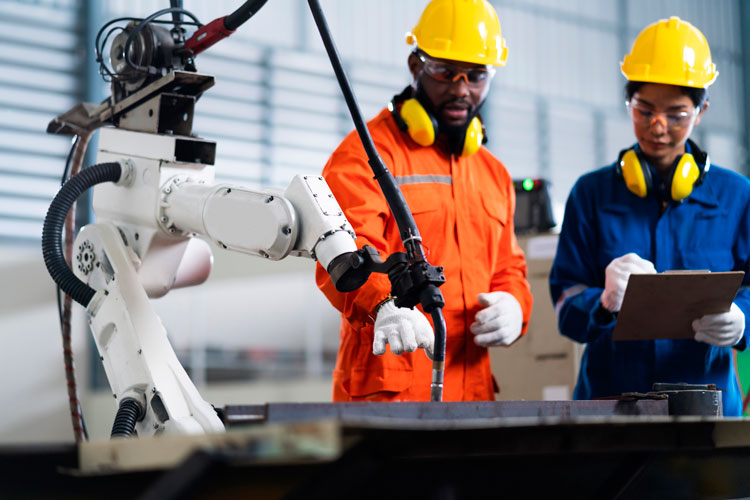
Modern manufacturing is undergoing a profound transformation. For decades, the industry relied heavily on manual labor and basic machinery, but advances in technology are now reshaping production lines and operational strategies. Today’s facilities are no longer simply places where products are assembled. They are sophisticated hubs of data, connectivity, and precision engineering. For those responsible for operations, sustainability, and efficiency, understanding how automation integrates into this environment is critical.
One of the most noticeable changes is the increased adoption of automation technologies. Robots, smart sensors, and AI-driven systems are becoming standard across manufacturing floors, enabling processes to run faster and more accurately than ever before. These tools are not just about replacing human labor. They are about enhancing it. Operators can now focus on oversight, quality assurance, and strategic decision-making while machines handle repetitive or highly precise tasks.
Industrial automation in particular has revolutionized production planning. Automated systems can monitor real-time data from every stage of the manufacturing process. This allows managers and engineers to predict equipment maintenance needs, optimize production schedules, and reduce downtime. Instead of reacting to machine failures, operations teams can proactively address issues, saving both time and resources. Additionally, automation supports consistent quality, as programmed machines maintain exacting standards without the variability inherent to manual processes.
Energy management has also benefited from these advancements. Modern manufacturing facilities consume large amounts of energy, and inefficient usage can quickly erode profit margins while increasing environmental impact. Automation technologies, integrated with smart energy management systems, provide real-time insights into energy consumption. This enables facility managers to identify inefficiencies, adjust operations, and even integrate renewable energy sources more effectively. The result is a leaner, greener, and more sustainable manufacturing operation.
Safety is another key area transformed by automation. Manufacturing environments often pose risks, from heavy machinery to hazardous materials. Automated systems can take on the most dangerous tasks, significantly reducing workplace injuries. Furthermore, advanced monitoring systems can track environmental conditions and equipment performance, alerting teams to potential hazards before they escalate. This proactive approach not only protects employees but also helps companies avoid costly downtime and regulatory penalties.
The integration of automation also extends beyond the factory floor. Supply chain management for example has seen significant improvements through automated inventory tracking and predictive logistics. Facilities can now synchronize production with demand more precisely, reducing waste and minimizing storage costs. Engineers and operations managers gain access to detailed analytics that guide decisions about production volume, procurement, and distribution. The ability to anticipate fluctuations in demand and respond quickly provides a competitive advantage that was difficult to achieve in a purely manual system.
However, the move toward automated manufacturing is not without challenges. Implementing advanced technologies requires significant investment and a skilled workforce capable of managing complex systems. There can also be a learning curve as traditional processes are adapted to new methods. For many decision-makers, this means balancing the potential efficiency gains against upfront costs and workforce training needs. Despite these hurdles, the long-term benefits of automation such as improved productivity, lower energy costs, enhanced safety, and higher product quality make it a compelling strategy for forward-thinking organizations.
Collaboration between human expertise and automated systems is central to success. Operators, engineers, and sustainability officers play an essential role in overseeing automated processes, analyzing performance data, and making strategic adjustments. Rather than being replaced by machines, human decision-makers are empowered to guide production more intelligently. By leveraging automation as a tool rather than a replacement, manufacturing becomes more adaptive, efficient, and resilient in the face of market pressures.
Emerging trends suggest that automation will continue to evolve. Artificial intelligence and machine learning are increasingly used to optimize processes dynamically, predicting issues before they occur and identifying new efficiencies. Internet of Things devices link equipment, energy systems, and production lines in a unified digital ecosystem. This connectivity allows facilities to operate more cohesively and respond in real-time to changing conditions, creating a manufacturing environment that is smarter, safer, and more sustainable than ever before.
For businesses looking to stay competitive, investing in automation technologies is no longer optional. Facilities that embrace these tools can achieve higher productivity, lower operational costs, and a smaller environmental footprint. They can also attract talent interested in working with cutting-edge systems and technologies. From predictive maintenance to energy management and beyond, automation provides measurable benefits that directly impact the bottom line.
In conclusion, modern manufacturing is no longer defined by sheer human effort alone. Automation is transforming the way factories operate, enhancing productivity, safety, and sustainability. Industrial automation enables facilities to optimize every aspect of production, from machine performance to energy use, while supporting strategic decision-making by skilled human operators. As these technologies continue to advance, manufacturers who adopt and integrate them effectively will be better positioned to meet the challenges of today’s rapidly changing industrial landscape.