
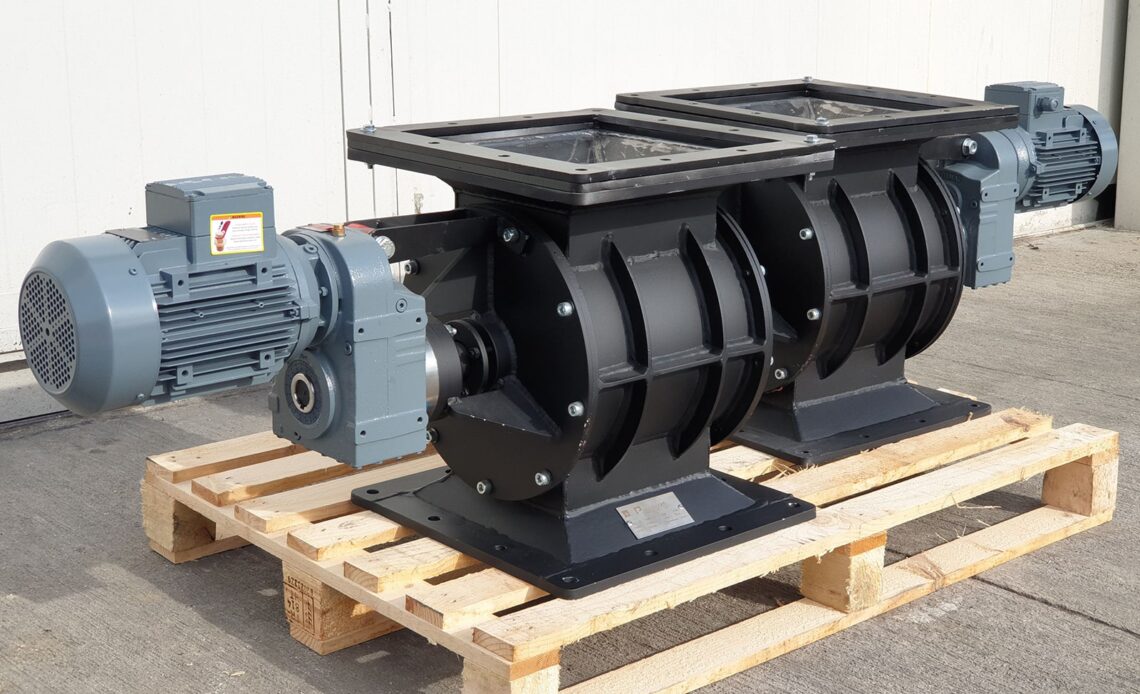
Strong movement of bulk material requires equipment that keeps motion steady across long operating hours. Rotary airlock valves support this goal by guiding particles between processing sections while limiting unwanted air passage. Reliable construction supports stable transfer even when production demand grows steadily across large-scale systems, where the air rotary valve helps maintain controlled flow and dependable performance.
Stable Material Transfer Design
Industrial handling systems require components that guide powders or granules smoothly from one section to another stage. Internal chambers rotate carefully, which helps particles move evenly without sudden drops or clogging events. Well-shaped chambers inside these valves support controlled release, which keeps surrounding machinery operating in balance.
Internal Motion Stability
Reliable internal motion allows material movement to remain even throughout production cycles. Balanced chamber spacing supports steady transfer, which prevents irregular buildup within surrounding equipment. When mechanical alignment remains accurate, these valves guide particles carefully between processing stages.
Within these systems, the air rotary valve supports controlled chamber rotation, which keeps transfer motion balanced. Accurate internal alignment reduces disturbance while improving consistent movement of powders through mechanical routes.
Long Operation Reliability
Production plants often operate continuously, which demands dependable equipment that tolerates repeated cycles. Carefully engineered valves withstand heavy usage while maintaining accurate chamber rotation. Strong housing construction protects internal parts from abrasion caused by constant particle movement.
Consistent Throughput Handling
Processing lines must move large volumes every hour without delay. Carefully designed openings inside valves allow material to move forward steadily, which keeps productivity stable across extended schedules.
- Chamber rotation guides particles forward while maintaining steady transfer across large systems
- Internal pockets move material gradually while preventing sudden overload in connected units
- Smooth chamber spacing encourages balanced movement of powders through processing routes
- Strong structural support allows valves to operate reliably through demanding production cycles
- Measured chamber movement maintains system rhythm during long industrial operating schedules
System Integration Efficiency
Large manufacturing systems require parts that cooperate with surrounding equipment smoothly. Well-engineered valves guide material between machinery sections without creating an imbalance in surrounding operations.
- Balanced chamber timing supports synchronized movement across connected industrial machinery units
- Strong housing structure protects moving parts during demanding operating schedules
- Accurate rotor clearance improves steady transfer within enclosed mechanical material pathways
- Reliable seals assist valves in maintaining stable air separation between processing zones
- Stable chamber movement protects nearby equipment from sudden material surge events
Accurate chamber motion supports stable movement of powders while reducing interruption risks during continuous operations. Careful engineering improves reliability across demanding schedules where systems must maintain steady output. Facilities benefit when valves maintain balanced transfer because this protects equipment while keeping productivity consistent across long manufacturing cycles.
FAQ
Why do industrial systems require controlled rotating transfer equipment for powders?
Controlled rotation guides particles steadily while preventing uneven buildup within production machinery.
How does chamber alignment influence efficiency in bulk processing equipment operations?
Accurate alignment improves steady movement, which supports stable system productivity during operation.
Why is steady material transfer important for large-scale manufacturing productivity levels?
Balanced transfer prevents disruption, which keeps machinery working smoothly across continuous schedules.